

Order by Dec 10 for Christmas delivery on Explorer, Cadet and Virtual kits shipped within the US. Shop kits

SPACE MARINER

Launch your own mission to the edge of space and bring the data home.

Space Mariner kits give anyone a real high-altitude balloon flight. Families, scout troops, clubs, schools, and hobbyists build the payload, predict the path, launch it, track it to the stratosphere, recover it, and see what it recorded.

Typical burst ≈ 19 miles / 98,000 ft Flight time 2–3 hrs Outside air as low as −70 °F
First product

The balloon kitHigh-Altitude Balloon Kit

Everything you need for one complete near-space flight, with a step-by-step mission guide from the launch plan to the final data set.

A typical flight

Up past Mount Everest, past the jets, into a black sky. Then the balloon pops and your payload floats home under a parachute.

The sky turns black up here Jets cruise ≈ 7 mi ← Mt. Everest, 5.5 mi POP! Burst ≈ 19 mi Climbing ≈ 1,000 ft/min Parachute ride home Landing! 0 5 10 15 20 miles 0 40 80 120 160 min Black sky up here Jets 7 mi ← Everest 5.5 mi POP! 19 mi Climbing 1,000 ft/min Parachute ride home Landing! → 05101520 miles 050100150 min
  • Grows as it climbsThe balloon swells to several times its launch size as the air thins.
  • Seriously coldOutside air can drop to about −70 °F on the way up.
  • Almost 3× higher than jetsAt burst it's nearly three times higher than cruising airliners.

What's in the box

One flight's worth of hardware plus the mission guide.

  • ×1
    Latex sounding balloonSized for a light payload and a stratospheric burst.
  • ×1
    Recovery parachute & flight lineRigged for a slow, controlled landing.
  • ×1
    Insulated payload capsuleFoam box you fit out with instruments and a camera mount.
  • ×1
    Flight data loggerRecords temperature, pressure, and humidity for the whole flight.
  • ×1
    APRS ham radio trackerSends live position on the 2 m amateur band for tracking on aprs.fi. A licensed operator from your local ham radio club sets it up and runs it.
  • ×1
    Mission guide & activitiesLaunch checklist, flight prediction walkthrough, and data-analysis activities.
Physics

Why the balloon grows as it climbs, and what sets the burst altitude.

Earth science

Layers of the atmosphere, read straight from your own temperature data.

Engineering

Designing a payload that survives cold, low pressure, and landing.

Data

Graphing a real flight and comparing the prediction with the actual path.

Shop the kits

Two editions, one for each age group.

Both editions fly the same balloon to the same altitude. What changes is how much you build yourself and how deep the activities go. Order as many kits as you need.

Included in every kit

A complete curriculum, from the first lesson to launch day.

Every kit ships with a printed lesson guide that takes your crew step by step through the science, the build, the tests, the launch and the mission report. Each lesson lists materials, timing, what to say, discussion questions and a printable worksheet. No science background needed.

6
Explorer lessons
8
Cadet lessons
6
Virtual Mission lessons
3–5
lessons per add-on mission
Ages 8–12Explorer Edition

Explorer Kit

Pre-assembled data logger and tracker, so younger crews can focus on the flight and the science.

  • Complete 6-lesson curriculum with printable worksheets
  • Ready-to-fly flight electronics
  • 30 Space Mariner mission patch stickers
  • Illustrated launch-day checklist
  • Activities: balloon size, cold, and air pressure
Ages 13 and upCadet Edition

Cadet Kit

Teens and adults wire and program the data logger themselves, run their own flight prediction, and write a full mission report.

  • Complete 8-lesson curriculum with printable worksheets
  • Build-it-yourself flight electronics
  • 30 Space Mariner mission patch stickers
  • Flight prediction and recovery planning
  • Data-analysis unit with graphing activities

No limit on kit orders. Kits ship within the US, and every order includes a printed Mission Brief and lesson guide. Choose how many kits and add add-on missions on the secure checkout page. Ordering for a large group, school, or event? Email us.

Virtual Mission

No launch site? Fly along from home.

We are flying a real balloon to the edge of space and filming the whole flight. Your crew builds hands-on experiments and a working sensor at home, then watches the flight and works with its real data once it is filmed. No helium, no launch site, no chase.

  • Complete 6-lesson curriculum with printable worksheets
  • Flight video and the flight's real temperature, pressure and altitude data, emailed to you once our mission flight is filmed (coming soon)
  • Build-it data logger: watch pressure drop on the stairs and temperature fall in the freezer
  • Vacuum-jar balloon, cloud in a bottle and a mini capsule egg-drop challenge
  • A mission certificate and a flight poster
  • 30 Space Mariner mission patch stickers
Ages 8 and upVirtual Mission

Mission Control Home Kit

Everything ships in one box. Families supply a laptop, eggs, a soda bottle, a flashlight and milk, a freezer and some stairs.

Compare kits

What's in each kit.

Every option comes with a complete lesson plan. The difference is what ships in the box and how much your crew builds themselves.

Item Explorer$900Ages 8–12 Cadet$700Ages 13 and up Virtual$300Ages 8 and up
Latex sounding balloon✓✓—
Recovery parachute & flight line✓✓—
Insulated payload capsule✓✓—
Flight data logger (temperature, pressure, humidity)✓✓—
APRS ham radio tracker (run by a licensed operator from your local ham club)✓✓—
Flight electronicsReady-to-fly (pre-assembled)Build-it-yourself (wire & program)Build-it data logger (stairs & freezer tests)
Curriculum6 lessons8 lessons6 lessons
Printable worksheets✓✓✓
Launch-day checklistIllustrated✓—
Flight prediction & recovery planningWalkthroughRun your own—
Data-analysis unit with graphing—Data activities✓—
Flight video + real flight data——✓Coming soon: emailed once our flight is filmed
At-home experiments: vacuum-jar balloon, cloud in a bottle, egg drop——✓
Mission certificate & flight poster——✓
30 mission patch stickers✓✓✓
Printed Mission Brief & lesson guide✓✓✓
Best forYounger crews who want to focus on the flight and the scienceTeens and adults who want to build, predict and analyze it allFamilies and classes with no launch site: no helium, no chase
BuyBuy ExplorerBuy CadetBuy Virtual

Explorer and Cadet each fly one real balloon. The Virtual Mission uses our own mission flight (not filmed yet; we email the video and data once it is); families supply a laptop, eggs, a soda bottle, a flashlight and milk, a freezer and some stairs.

Tracked by ham radio

Every launch partners with a local ham radio club.

Explorer and Cadet kits and every Launch Day are tracked with APRS, the amateur (ham) radio tracking network. Each flight is a chance for kids to meet real radio operators, see ham radio at work, and maybe earn a license of their own.

APRS tracker on 2 m

The payload's tracker sends its position on the 2 meter amateur radio band. Receiving stations pass it on, so you can follow the flight live on aprs.fi.

Your club's licensed operator

Transmitting on amateur radio requires an FCC license. A licensed operator from your local ham radio club sets up the tracker with their callsign and runs it on launch day.

Find a club near you

Use the ARRL club finder to find a club in your area. Reach out and invite them to be your launch partner.

Kids can get licensed too

The entry-level Technician license is a multiple-choice exam that kids and parents can study for together. Free practice is at hamstudy.org.

Flight day

Six stages from the ground to the stratosphere and back.

Each stage has its own activity, so everyone in your group has a role, not just the launch crew.

  1. T − 2 weeks

    Build

    Your crew assembles the payload capsule, mounts the logger and tracker, and weighs everything. Your local ham club's licensed operator sets up the tracker.

  2. T − 3 days

    Predict

    Run a flight prediction from the forecast winds and plan where the payload is likely to land.

  3. T − 0

    Launch

    Fill, tie off, and release using the launch checklist, with everyone on a job.

  4. T + 0–2 hrs

    Track

    Follow the balloon live on aprs.fi as its ham radio tracker reports from the tropopause and into the stratosphere.

  5. T + 2–4 hrs

    Recover

    A chase team drives to the landing site and brings the payload home.

  6. T + 1 day

    Analyze

    Download the data, graph the flight, and write the mission report.

In-person · We come to you, anywhere in the US

Monthly Launch Day

Each month we travel to one group for an in-person balloon launch at your location. Your family, youth group, club, school, or company gets the whole day: we mentor your group by video call in the weeks before the launch, then bring the kit, run the launch with you, and lead the chase and recovery.

Explorer Launch Day
Ages 8–12 · hands-on stations and a guided launch · parents and guardians welcome
Cadet Launch Day
Ages 13 and up · your group runs the checklist and rides along on the chase and recovery
Included mentoring
Three one-on-one mentoring video calls before launch day to prepare your group, plan the flight, and answer questions
Tracking
APRS ham radio tracking, run by a licensed operator from your local ham radio club
Price
$3,000 per Launch Day, flight hardware and 30 mission patch stickers included · US locations only
Choose a month
Select a month $3,000
Reserve and pay

One group per month. At checkout you choose Explorer or Cadet and tell us your location. We then set the exact date together on your first mentoring call. If weather grounds the flight, we move it to the next suitable day.

Who we are

Built by a teacher who has flown balloons with kids since 2016.

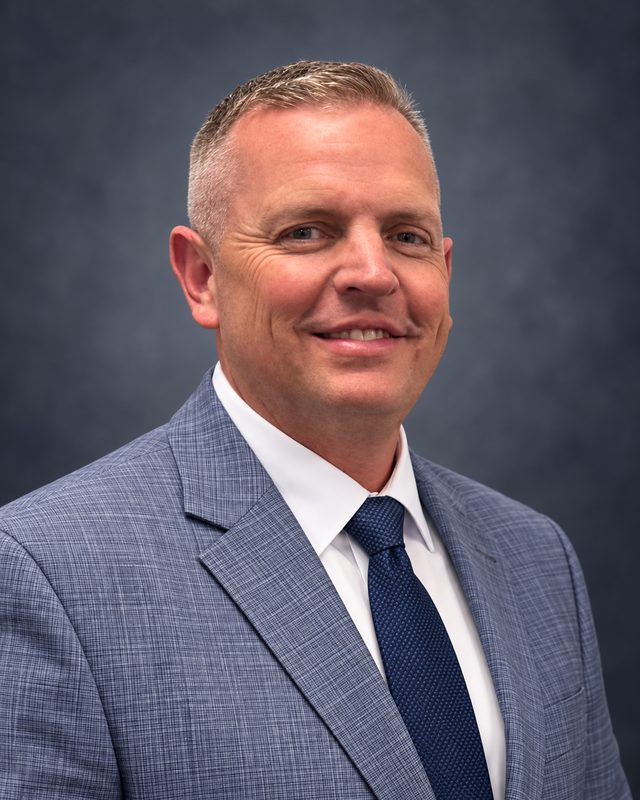
Space Mariner comes from Tooele County, Utah, and the classroom of Clint Thomsen, a career and technical education teacher with the Tooele County School District.

Clint Thomsen
Clint Thomsen, W7CBLSpace Mariner

Since 2016, Clint's students have built radio trackers and sent them to the stratosphere on high-altitude balloons, launching from the old Wendover airfield, Dugway Proving Ground, Box Elder County and Skull Valley. Their 2023 balloon burst at 107,000 feet, and getting it back meant a 10-mile round-trip hike into the Cedar Mountains, following the payload's radio signals.

Ham radio has been part of it from the start. Clint is a licensed General-class ham operator (W7CBL). His students' payloads have sent their telemetry home by ham radio, and the 2023 flight was tracked with APRS, LoRa and a satellite beacon. In April 2024, after nearly three years of work, Clint led a live ham radio contact between Tooele County students and an astronaut on the International Space Station, with help from the Bridgerland and West Desert amateur radio clubs. Seven students earned their own ham licenses along the way. He has since served as an education mentor for ARISS, the program behind these contacts, helping a school in Providence, Utah prepare for its own in 2026.

Space Mariner puts that same approach into a box: real flight hardware, a local ham radio club, and kids running the mission. Now families, youth groups and schools anywhere in the US can fly one too.

“There's nothing more fulfilling as a teacher than to see a passion that you have conveyed and received by a student.”

Clint Thomsen, to KSL.com, April 2024
Add-on missions

Add-on missions for your kit.

Your balloon kit gets you flying. Add-on missions work with either edition (Payload Engineering is best for ages 13 and up), each with its own hardware and a 3–5 lesson guide for a new science or engineering focus. Add them when you buy a kit, or buy one on its own. They ship as each one is released.

  1. +1

    Atmospheric Science

    Measure how temperature, pressure, and humidity change through each layer of the atmosphere.

    Pre-order add-onBuy
  2. +2

    Radio & Telemetry

    Send live data from the payload to a ground station and learn how the signal gets there.

    Pre-order add-onBuy
  3. +3

    Payload Engineering

    Design, test, and fly an original experiment under real weight and power limits.

    Pre-order add-onBuy
  4. +4

    Near-Space Photography

    Capture the curve of the Earth and the black sky above it from the edge of space.

    Pre-order add-onBuy
Ordering

Secure checkout with Stripe.

Every Buy and Reserve button opens a secure Stripe checkout page. You choose quantities and add-ons there, pay by card, Apple Pay or Google Pay, and get an email receipt.

Kits
Ship within the US with a printed Mission Brief and full lesson guide.
Virtual Mission
Ships within the US with a printed Mission Brief and lesson guide; we email the flight video and data once our mission flight is filmed (coming soon).
Launch Days
Your first mentoring call is scheduled within a week of booking.
Large orders
Schools, events and groups: email us for help with larger orders.
Questions

Send us a message

No email app needed. We usually reply within 1–2 business days.

Terms, safety & liability

Please read before you order.

Weather and scheduling

High-altitude balloon launches depend on wind, cloud cover, precipitation, and airspace conditions. Space Mariner decides whether conditions are safe on the scheduled Launch Day. If they are not, the launch moves to the next suitable day we agree on together, at no extra charge. Space Mariner is not responsible for delays, cancellations, lost time, travel costs, or other losses caused by weather or other conditions outside our control.

User error and kit use

Kits must be assembled, launched, tracked, and recovered by following the included mission guide. Space Mariner is not responsible for damage, injury, loss of equipment or data, or failed flights caused by user error, including incorrect assembly, overfilling or underfilling the balloon, modified hardware, ignored instructions, or unsafe recovery attempts.

Flight outcomes

Every flight is different. Altitude, flight time, landing location, and data quality are not guaranteed, and a payload may land somewhere it cannot be safely recovered. Figures on this site are typical values, not promises.

Your responsibilities

You are responsible for following all federal, state, and local rules that apply to your flight, including FAA regulations for unmanned free balloons, and for getting permission to launch from and recover on any property. Never try to recover a payload from power lines, trees, roads, water, or private land without permission. Children must be supervised by an adult at all times.

Limitation of liability

To the fullest extent allowed by law, Space Mariner's total liability for any claim related to a kit, add-on, mentoring, or Launch Day is limited to the amount you paid for that item. Space Mariner is not liable for indirect, incidental, or consequential damages.

Assumption of risk

Launch activities take place outdoors and involve lifting gas, moving vehicles during recovery, and uneven terrain. By placing an order or attending a Launch Day, you accept these risks for yourself and for any minors in your care, and you agree to these terms.